

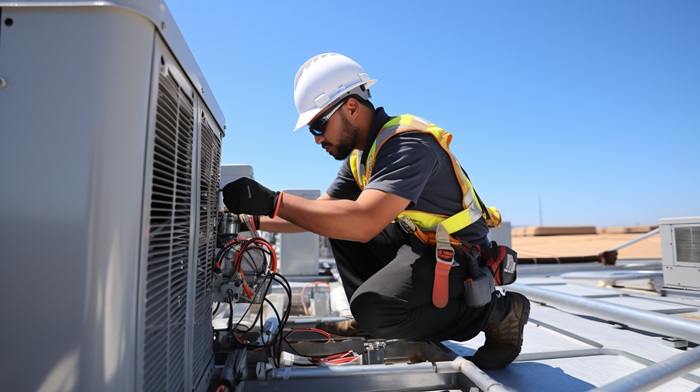
Heating, ventilation, and air conditioning (HVAC) technicians keep Texas workplaces comfortable and productive year-round. The work often happens in attics, rooftops, crawlspaces, and mechanical rooms during the hottest months. Live electricity, sharp metal, heavy equipment, refrigerants, and extreme heat can turn a routine service call into a serious hazard in seconds.
A slip from a ladder, contact with energized parts, or a refrigerant leak can cause life-changing injuries. Lifting heavy equipment, cutting duct, and working in hot, stuffy spaces strain muscles and lungs. Planning the job and using these work practices helps technicians finish the day strong and go home safe:
1 Shut off power and lock it out.
Turn off power before you open any panel or touch internal parts. Apply lockout/tagout devices and follow your company’s lockout procedure every time. Test circuits and confirm zero energy before you reach into equipment. This simple pause protects you from electrical shock and arc flash.
2 Wear personal protective equipment (PPE) that fits the task.
Put on safety glasses, sturdy work shoes, and work gloves before you start the job. Add cut-resistant gloves when handling sheet metal and ductwork. Use hearing protection near loud fans and compressors. Use a respirator when dust, mold, insulation fibers, or chemical vapors fill the air. The right PPE shields your eyes, hands, lungs, and feet from common HVAC-related injuries.
3 Handle refrigerants and chemicals safely.
Read labels and Safety Data Sheets (SDS) for every refrigerant and chemical you use. Store cylinders upright, secure them during transport, and check for leaks. Work in well-ventilated areas and keep refrigerant lines and hoses in good condition. Refrigerants can push oxygen out of tight spaces and cause dizziness, confusion, or worse. Some cleaners and solvents burn or irritate the lungs, skin, and eyes. Good handling and storage habits help you avoid these hazards.
4 Use safe methods for heights, lifting, and tight spaces.
Inspect ladders before use and place them on firm, level ground. Climb with three points of contact and keep tools secured so they do not fall. Use fall protection on roofs or near open edges. Plan lifts for heavy or awkward equipment. Use dollies, hoists, or a second person instead of attempting a one-person lift. In attics, crawlspaces, and other tight areas, test the air when your company’s confined space procedures require it. Hot, still air, extreme temperatures, and low oxygen increase the risk of heat stress and sudden collapse. Take breaks, drink water, and leave the space if you feel light-headed, confused, or sick.
5 Keep work areas orderly and watch for older materials.
Pick up tools and scrap as you work to prevent trips and slips. Route cords and hoses away from walkways and ladder bases. Keep guards in place on moving parts and avoid loose clothing, jewelry, and long hair around belts and fans. In older buildings, watch for insulation, pipe wrap, or ceiling materials that may contain asbestos. If you see damaged or unknown material, stop work and report it. Do not cut, drill, or tear into it until your employer evaluates and controls the hazard.
HVAC work demands skill, strength, and focus. No repair call or system startup is worth a shortcut that puts your life or health at risk.
For more information, download DWC’s HVAC Technician Safety Fact Sheet, or contact one of our Safety Training instructors or Occupational Safety and Health consultants at HealthSafety@tdi.texas.gov or 800-252-7031, option 2.