

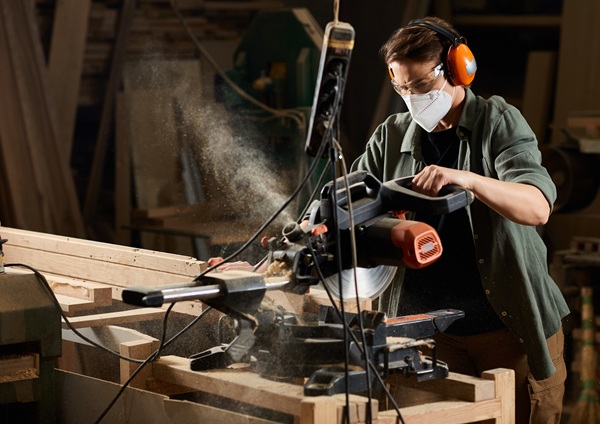
Wood products industries across Texas — including sawmills, cabinet and furniture shops, biomass facilities, animal bedding plants, and construction sites — employ tens of thousands of workers who cut, shred, dry, and sand wood every day. Those activities release tiny particles into the air that may look harmless, but are not.
Wood dust irritates your eyes, nose, throat, and lungs. Long-term exposure can cause asthma, chronic breathing problems, and certain cancers. Some wood species trigger allergies or skin rashes. Fine dust also settles on rafters, beams, ledges, and inside dryers, conveyors, and dust collectors, where a single spark can trigger a fast-moving fire or dust explosion.
These five tips can help protect workers who build cabinets, produce flooring, run pellet or paper mills, and perform other jobs in Texas’ wood products industries, which contribute more than $20 billion in direct economic output each:
1 Capture dust at the source.
Connect saws, sanders, planers, chippers, hammer mills, and pelletizers to a dust collection or local exhaust system. Fit hoods close to each dust source, including saws, sanding stations, pellet mills, and bagging lines. Keep ducts, bags, and filters clean and intact. Never bypass or disable dust controls to speed up a job. Dust captured at the tool never reaches a worker's lungs or a combustible surface.
2 Clean up correctly.
Sweep dust off floors, ledges, rafters, conveyor supports, and equipment frames before it accumulates. Use a HEPA-filter vacuum or wet methods instead of dry sweeping or compressed air, which send dust back into the air workers breathe. Empty bins before they overflow, handle them gently to avoid dust clouds, and dispose of dust, scraps, and oily rags in metal containers with tight-fitting lids kept away from ignition sources.
3 Work smart to make less dust.
Keep blades and bits sharp. Dull tools make more dust and kick back. Plan cuts so you remove only what the job needs. Do the dustiest tasks — such as sanding, grinding, and dumping product from hoppers or bagging lines — outdoors or in well-ventilated areas. Never smoke, weld, or grind near wood dust. Report visible dust clouds, strong odors, or dust building up on beams and equipment.
4 Wear the right personal protective equipment (PPE).
Protect eyes from chips and dust. Wear sturdy shoes and gloves when handling rough lumber, pellets, or bedding. When ventilation and housekeeping alone can't keep dust levels low, wear a properly fitted respirator. Follow your employer's respiratory protection program. Clean or change PPE on schedule, so dust doesn't leave the shop on workers’ clothes, hair, and shoes.
5 Train workers and act on symptoms.
Every worker who touches wood or dusty product — production crews, maintenance, cleanup staff, and forklift operators — needs training on dust hazards, control methods, PPE, and safe cleaning. Encourage workers to report coughing, wheezing, shortness of breath, rashes, or eye irritation that worsen at work. Take those reports seriously and improve controls. Regular checks of dust systems, housekeeping, and work practices prevent long-term illness and serious incidents.
For more information, download DWC's Wood Dust Hazards and Controls – Take 5 for Safety publication in English or Spanish, or contact a Safety Training instructor or Occupational Safety and Health consultant at HealthSafety@tdi.texas.gov or 800-252-7031, option 2.