

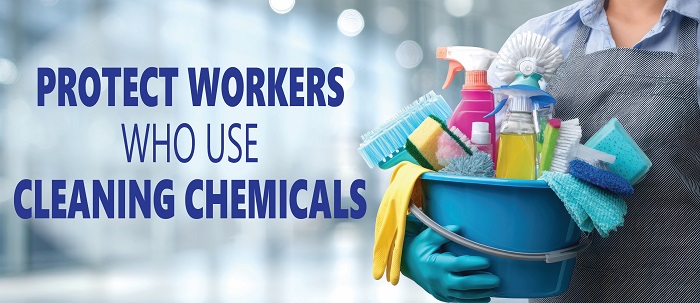
Janitors and cleaning staff keep workplaces healthy and running smoothly. But the chemicals they use every day — cleaners, sanitizers, and disinfectants — can cause burns, breathing problems, and serious injuries if handled the wrong way. Most of these injuries are preventable with proper training, planning, and storage. Whether you manage cleaning crews or work on the front line, following safe practices can protect workers and reduce costly incidents.
Here are eight tips to help prevent workplace injuries from cleaning chemicals:
1 Choose safer products and cleaning methods when possible.
Pick a cleaner, sanitizer, or disinfectant based on what the task requires and use the mildest product that will still control germs. When possible, rely on safer tools like microfiber cloths, HEPA vacuums, hands-free mops, and certified-green cleaners.
2 Train workers before they use cleaning chemicals.
Make sure workers read the label and the Safety Data Sheet (SDS) before using a product so they understand the hazards, required personal protective equipment (PPE), and first-aid steps. Review what the pictograms and signal words mean. Keep SDSs easy to find in the janitor’s closet or on a shared device. During safety meetings, go over health hazards, proper handling, dilution steps, and emergency procedures in clear, simple language.
3 Never mix cleaning products.
Remind workers to never mix different cleaners, especially products that contain bleach or ammonia. Post clear reminder signs at mixing stations and near storage areas. Remove any unlabeled bottles from service. Mixing chemicals can create toxic gases in seconds.
4 Dilute chemicals safely and correctly.
Use the exact amounts listed on the label. Provide dedicated measuring tools and show workers how to dilute products without splashing. Always add the chemical to water (not the reverse) and mix only in well-ventilated areas. Over-concentrated products increase risks of burns and breathing problems
5 Ventilate areas where chemicals are used or stored.
Open doors to let fresh air flow, or use local exhaust, bathroom fans, or building ventilation systems as instructed. Avoid storing large amounts of chemicals in small, closed rooms. If storage space is limited, improve ventilation or reduce the inventory to prevent fume buildup. Good airflow helps reduce vapors and strong odors that can irritate eyes and lungs.
6 Provide and use the right PPE.
Supply gloves, goggles, and protective clothing based on the SDS, and make sure sizes and types fit the job and the worker. Replace damaged or worn PPE, and train workers how to put it on and take it off. Remind workers to wash hands after using chemicals, especially before eating, drinking, or smoking.
7 Store chemicals properly at the end of each shift.
Keep containers sealed, labeled, and stored in cool, well-ventilated areas. Store incompatible products (such as bleach and acids) in separate, labeled areas. Place powders above liquids and avoid stacking boxes and containers so high that they can fall. Keep food and drinks out of chemical storage rooms.
8 Prepare for spills and emergencies before they happen.
Train workers on cleanup steps, and review first-aid procedures for exposure. Practice simple spill and exposure steps — such as evacuating the area, using spill kits, going to an eyewash, and reporting to a supervisor. Quick and calm action can prevent minor incidents from becoming serious.
Need help?
Contact a DWC safety training specialist or an on-site occupational safety and health consultant at HealthSafety@tdi.texas.gov or 800-252-7031, option 2. For more information on free or low-cost safety training or an OSHA-compliance consultation, visit www.txsafetyatwork.com.