

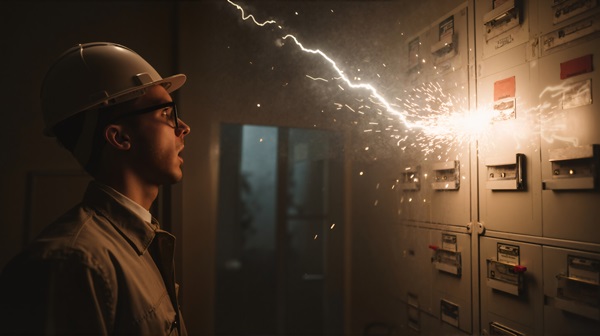
Electricity doesn’t just shock — it can explode. In an instant, an arc flash can turn metal into shrapnel and fill a room with intense heat and pressure, even on systems many consider low voltage. An arc flash occurs when electricity breaks free from its normal path and travels through the air. It can cause severe burns, blindness, hearing loss, broken bones, or even death. Much of the harm comes from the extreme heat, which can ignite clothing and lead to serious burns. The good news — these safety tips and proper training can prevent most arc flash incidents:
1 Shut off equipment before you touch it.
Always turn off electrical equipment and circuits before working on them. Use lockout/tagout procedures so no one can restore power while you still have tools inside the equipment. After shutdown, test with the proper meter and leads to confirm no voltage remains. Remember that stored energy in capacitors or batteries can still release dangerous shocks or arcs if you do not discharge it safely.
2 Treat energized work as the last resort.
Only work on live parts when shutting off power would create a greater danger or is not possible. Document that decision. When energized work must happen, use an energized work permit, plan the job step by step, and limit the task to trained, qualified workers who understand the system and the risks. Even a quick task like tightening a loose wire counts as energized work and can trigger an arc flash.
3 Respect boundaries and warning labels.
Stay outside posted arc flash and shock boundaries unless your job requires entry and you have the proper training and personal protective equipment (PPE). Arc flash labels on panels and switchgear provide key information, including the arc flash boundary, the potential heat exposure, and the required PPE rating. Marked floors, barricades, and signs around high-risk equipment help keep unqualified workers and passersby out of harm’s way.
4 Wear arc-rated PPE, not street clothes.
Regular work clothes, especially synthetics, can melt or catch fire in an arc flash, making burns much worse. When labels or procedures require it, wear arc-rated shirts, pants, or coveralls, along with a face shield or hood, hard hat, safety glasses, hearing protection, gloves, and electrically rated boots. Make sure PPE meets or exceeds the arc rating listed on the equipment (measured in calories per square centimeter). For higher-risk tasks, your employer may require a full arc flash suit with a hood to protect your head, face, and body. Inspect PPE before each use, keep it clean and dry, and replace any gear that shows damage, heavy wear, or has been exposed to dirt, oil, or other harmful substances.
5 Keep equipment well maintained.
Dust, moisture, corrosion, and loose connections increase the risk of an arc flash. Use regular inspections and preventive maintenance to find hot spots, damaged insulation, and overloaded circuits before they fail. Keep panels closed, covers in place, and work areas clear so breakers and protective devices work as designed. If your work requires rubber insulating gloves and other electrical safety gear, test and inspect them regularly and use leather protectors when needed.
6 Get trained and speak up.
Training on arc flash hazards, National Fire Protection Association 70E practices, and your company’s electrical safety program gives workers the tools to recognize danger and choose safer actions. Refresher training and hands-on practice help skills stick, especially for tasks like lockout/tagout, using test instruments, and selecting PPE. If a job seems rushed, unclear, or outside your training, stop and ask a supervisor or qualified electrical worker for help before you proceed.
Arc flash incidents can cause life-changing injuries, but strong safety programs can prevent them. For help improving your electrical safety practices, request a free, confidential onsite consultation through DWC’s Occupational Safety and Health Consultation (OSHCON) program. OSHCON consultants can identify hazards, review your safety programs, and provide hands-on training without issuing fines or citations. You can also download DWC’s free Arc Flash Safety Fact Sheet or stream arc flash and electrical safety videos on DWC’s Workplace Safety Videos webpage. For more information, visit www.txsafetyatwork.com or call 512-804-4610.