

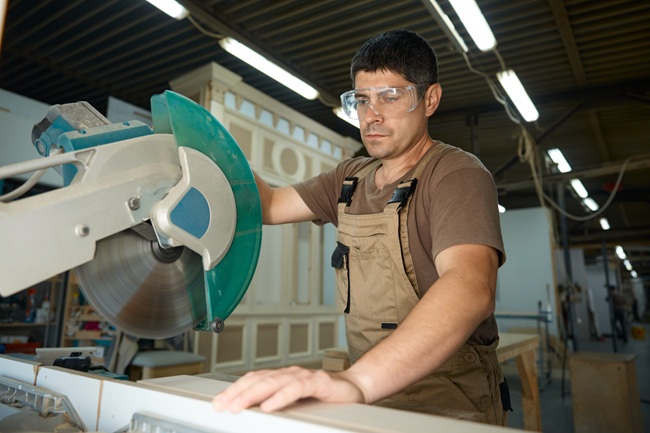
A worker reaches into a machine to clear a jam. The machine cycles. In less than a second, an amputation occurs.
Machines don't slow down for mistakes. They catch sleeves, gloves, and fingers faster than you can pull away. In 2018, machines played a role in 58% of work-related amputations, according to the U.S. Bureau of Labor Statistics. These workers missed a median of 31 days away from work. That's more than three times longer than the typical injury.
Many employers still skip key safeguards. In early data for fiscal year 2026, the Occupational Safety and Health Administration (OSHA) ranked lockout/tagout (29 Code of Federal Regulations (CFR) 1910.147) third on its list of most-cited standards. Machine guarding (29 CFR 1910.212) ranked 10th. Together they drew nearly 3,000 violations.
Use these seven tips to keep hands, hair, and clothes out of moving parts.
1 Know where machines bite.
Machines can hurt workers in four main ways:
- Point of operation: where the machine cuts, shapes, drills, or bends material.
- Pinch points: where two parts meet and can catch or crush a hand.
- Moving parts: anything that spins, slides, or moves back and forth.
- Flying debris: chips, sparks, and bits the machine throws.
2 Use machines only with guards in place.
If a machine can cut, crush, or catch you, it needs a guard. A good guard attaches to the machine and doesn't cause new hazards. Never reach over, under, around, or through a guard. Follow your employer's safety procedures and, when available, the manufacturer's instruction for operating, inspecting, and servicing the machine and choosing protective gear.
Your workplace may use:
- Barrier guards that block hands from moving parts.
- Two-hand controls that keep both hands out of the danger zone.
- Light curtains and safety mats that stop the machine when someone reaches or steps in.
- Automatic feeders that move material so hands stay out of the way.
3 Treat a missing guard as a stop sign.
Taping or wedging a safety switch saves a few seconds. It can also cost a hand. If you find a damaged, missing, or bypassed guard:
- Stop using the machine.
- Take it out of service following your workplace rules.
- Tell your supervisor immediately.
4 Lock it out before you reach in.
Clearing a jam takes seconds. So does losing a finger. Before you reach into a machine to clear a jam, clean, fix, or adjust it, follow your employer’s lockout/tagout procedure. Only workers trained and authorized to perform lockout/tagout should do these steps:
- Shut down the machine.
- Isolate it from every hazardous energy source.
- Apply locks and tags as required by the procedure.
- Release or restrain stored energy in springs, hydraulics, and air lines.
- Verify that all hazardous energy is controlled before you begin work.
Don’t rely on a stop button. It stops the machine but does not isolate it from its energy sources. Someone could start the machine again, or a fault could cause it to restart.
5 Check guards before you start.
A quick look before each shift can save a hand. Watch for guards that:
- Sit loose or out of place.
- Have cracks, damage, or missing parts.
- Leave gaps where fingers can reach moving parts.
- Get in the way of your work.
Report problems before you turn on the machine.
6 Dress for moving parts and flying chips.
Spinning parts grab anything loose. They pull it in, and you with it. Machines also throw chips, sparks, and bits of material. Protect yourself:
- Wear safety glasses or a face shield.
- Wear snug sleeves and tuck in your shirt.
- Take off dangling jewelry.
- Tie back long hair.
- Ask your supervisor if gloves make sense for the task. A spinning part can catch a glove and pull in a hand.
7 Train every worker.
Workers can't avoid hazards they don't understand. Train operators and maintenance staff before they use a machine. Train them again when you add or change a guard. Cover:
- The hazards of each machine.
- How each guard protects workers.
- When guards may come off and who may remove them.
- When to use lockout/tagout.
- What protective gear the job needs.
- How to report a damaged or missing guard.
Learn more
For more information, visit OSHA's machine guarding webpage. You can also download DWC's Machine Guarding Fact Sheet in English or Spanish or workplace safety videos. For more free safety resources, visit www.txsafetyatwork.com.