Fire Safety Inspections
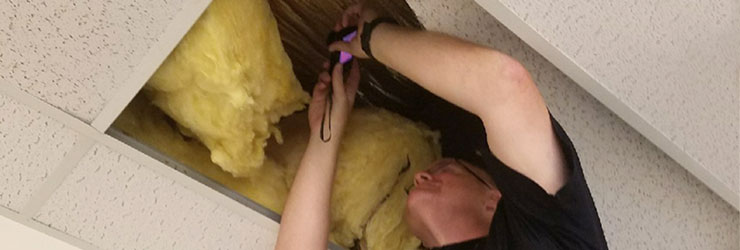
Fire Safety Inspections Services conducts fire safety inspections of public and private buildings and facilities throughout the state, including state buildings, daycare and elder-care centers, foster homes, hospitals, hotels and motels, university and college buildings, and other buildings upon request or complaint. Inspections of storage, handling, and use of flammable liquids are conducted at retail service stations throughout the state.
To request an inspection, please send a message to fireinspection@tdi.state.tx.us.
State Agency and University Fires Reported:
State owned and leased facilities FY 2012
On March 2, there was a small fire in a 2-story mixed occupancy (Business and Assembly) building on the University of Houston main campus in Houston. A motor on a malfunctioning air handler in an IDF (Intermediate Distribution Frame) room caught fire; the circuit breaker did not trip because a contractor had installed an oversized breaker and nobody from the University had detected this before the fire. There were no injuries; there was a short term evacuation of the building. The estimated damage is $8,000 to replace/repair the equipment and clean up the building.
State Agency and University Fires Reported:
State owned and leased facilities FY 2011
On July 13, 2011, Sam Houston State University reported a fire in a student apartment in the Bear Cat Apartments. The fire resulted from overheating cooking oil on a kitchen range that ignited. The sprinkler system activated one head over the stove and extinguished the fire. The building fire alarm alerted the building occupants who evacuated. The Huntsville Fire Department responded and conducted over haul operations. The building was re-occupied.
The Department of Disability and Aging reported a fire at the Richmond State Supported Living Center on May 3, 2011. The fire was started on the roof by a construction torch.The building was not occupied at the time of the incident. Workers extinguished the fire with a portable fire extinguisher.
Texas Youth Commission reported on April 22, 2011, a fire at the Ron Jackson 2 Unit of TYC. The fire occurred in Dorm 4 in an air vent off of a sleeping room. The vent had been penetrated by a resident who stuffed papers in the vent and set them on fire. The detection system alerted the building alarm. The building was evacuated and the fire was located by the staff who enlarged the penetration and extinguished the fire. Residents were moved to a vacant dorm.
On April 5, 2011, Denton State Supported Living Center reported a fire in Building 528, a residential building. The fire was set by a resident on his mattress. The fire was extinguished by staff before the sprinkler system activated. The Denton Fire Department was dispatched.
On February 20, 2011, Texas A&M University - Corpus Christi reported a fire in Laguna Hall Dormitory. The fire occurred in the third-floor kitchen and resulted from unattended cooking. The fire set off the automatic sprinkler system and alarm. The building was evacuated. The Corpus Christi Fire Department responded. The fire was extinguished by the sprinkler system. Minimum fire damage resulted in the third-floor kitchen; the second-floor kitchen sustained water damage.
Stephen F. Austin State University reported a fire on February 4, 2011. The fire occurred in Steen Hall Dormitory at 4:21 a.m. The fire was in a sleeping room and was confined to the bedding. The ignition was attributed to a lamp adjacent to the bed with an oversized lamp bulb. The residents were awakened by the fire and attempted to extinguish the fire with their hands. They received burns to their hands and received medical attention. The sprinkler system activated two heads and sounded the building alarm. The building was evacuated. The fire department responded and extinguished the fire with hand lines attached to the stand pipe system.
On January 9, 2011, lighting struck the roof of the Greystone Apts. on the campus of Texas Southern University, resulting in a fire in Building 4. A resident smelled smoke and noticed the fire. A manual pull station was activated to sound the alarm and the building was evacuated. The Houston Fire Department was dispatched and extinguished the fire. One apartment suffered fire damage and a second had water damage.
On December 14, 2010, Sam Houston State University reported a fire in the Bearkat Village Apts. No. 158. The fire was ignited by unsupervised cooking which overheated a pan of frying oil on a kitchen range. The fire was extinguished with a portable extinguisher before the automatic sprinkler system was activated. The fire detector activated, which alarmed the building, which was evacuated. The Huntsville Fire Department responded. Minimal damage was caused to the range and adjacent cabinets.
On September 26, 2010, the University of Texas at Austin reported a fire in the Nano Science and Technology Building. The fire occurred in a laboratory on the third floor. Investigation by the Austin Fire Department and UT Fire Marshal Office revealed that a motor to a vacuum pump located in a fume hood ignited. The ignition activated the sprinkler system, which extinguished the fire and activated the fire alarm. The fire damage was estimated to be $47,295 to the laboratory and equipment.
The Texas Forest Service reported a fire in their Huntsville District Office on September 18, 2010. The fire was caused by a Dell portable computer battery. The Huntsville and Crabbs Prairie fire departments responded. The building is out of service until repaired.
On September 17, 2010, Texas State University reported a fire in the Evans Liberal Arts Building, No. 508. The fire was in a classroom on the third floor, Room 316. The area of origin was reported to have been on a desk located adjacent to a wall with on obvious ignition source present. The fire alarm was initiated by smoke detectors and the building evacuated. The San Marcos Fire Department responded and extinguished the fire with portable fire extinguishers. The room of origin suffered moderate damage and required substantial repairs and clean up to return the building to occupancy.
State Agency and University Fires Reported:
State owned and leased facilities FY 2010
The University of Texas at Arlington reported a fire on February 19, 2010, in the Baker Chemistry Research Building. The fire was the result of a student error in heating oil in a fume hood. The student thought he had turned off the heater, but he had not and an ignition resulted. The fire was contained in the hood and damage was limited to the hood and hood contents. The fire was extinguished with a portable extinguisher. The sprinkler system did not activate nor did the detection and alarm system, due to the small nature of the ignition. No injuries were suffered. The fire department was not dispatched
The Texas Department of Criminal Justice reported a fire at the Powledge Unit on March 1, 2010. The fire was in a maintenance shop building used for storage and charging radios as well as maintenance offices. The fire was on a wooden work bench used to store radios while being charged. The local responding fire department determined the fire to be electrical in nature from a radio charger. The building sustained structural damage and there was damage to the equipment. No sprinkler or detection system was present. The fire was noticed by inmates who notified guards. No injuries were sustained.
The Texas Department of Aging and Disability Services reported a fire at the Brenham State Supported Living Center on May 6, 2010. The fire was in the clean linen room of the Fannin Villa Home B Unit. The detection system sounded an alarm and a water flow alarm also activated. The fire originated in a cart of clean laundry that had been transported from another state school the morning of the fire. No sources of ignition were identified. The fire department responded. The fire was extinguished by the sprinkler system. There was damage to the room structure, stored linen and other contents as well as residual water damage. No injuries were noted.
Texas A&M University Health Science Center in Houston reported a fire on January 26, 2010. The fire occurred in Room 625 of the IBT Building, which is an 11-story high rise. The fire was in a laboratory and started during a standard laboratory procedure using ethanol contained in a vessel that was exposed to an open flame. The ethanol was spilled on the lab bench and a fire erupted but was limited to the top of the bench. The lab attendant obtained a fire blanket and placed it over the fire area and reported the fire. A smoke detector in the lab initiated the fire alarm, and evacuation procedures were started without incident. Lab protocols were followed. Fire damage was contained to the laboratory work bench and no structural damage was incurred. Houston Fire Department responded and took necessary action.
Texas A&M University-College Station reported a fire in Room 605 of the HEEP Center on November 20, 2009. The fire occurred in an agronomy laboratory drying oven. During the drying procedure a student opened the oven, which caused a flash fire to erupt. The student used a portable fire extinguisher on the blaze, which pushed the burning material out of the oven and ignited other materials stored adjacent to the oven. Assuming extinguishment. the student evacuated to the exterior. The continued ignition activated the automatic sprinkler system, which extinguished the fire with a single head activation. The building alarm sounded and the building was evacuated. The University Safety Office and College Station Fire Department responded.
On November 20, 2009, the University of Houston reported a fire in Bates Residence Hall. The fire resulted when a student placed an energized electric hot plate on a chair. The chair ignited, activating one fire sprinkler head and the building fire alarm system. The building was evacuated. The Houston Fire Department responded.
Texas Woman's University reported a fire in Multi-Purpose Classroom Laboratory Building on November 18, 2009. The fire occurred in the main electrical room where electricians were working on the main switch gear. One of the electricians activated the manual fire alarm system and the building was evacuated. The sprinkler system activated and contained the fire. The Denton Fire Department responded. Damage was limited to the switch gear and minor damage in the dental clinic on the floor above.
On November 18, 2009, the Department of Aging and Disability reported a fire at the Denton State Supported Living Center in the Gardenridge Building Kitchen. The fire resulted from a plastic food tote being placed on the burner of an energized kitchen range. The building fire alarm system was activated and the building was evacuated. The fire was extinguished by a security officer using a portable fire extinguisher. The Denton Fire Department alarm was canceled prior to arrival. The fire was not large enough to activate the sprinkler system. Damage was limited to the range top.
On November 6, 2009, the University of Texas at Arlington had a fire in the Legacy Heights Apartments. The fire resulted from unattended cooking when a pan of grease was left on an energized gas range. The fire was contained to the stove top and damage was limited to the vent hood. The room detector activated, which was monitored by the University police department. The fire was extinguished by the apartment occupant prior to arrival of the University P.D. and Arlington Fire Department. The fire department alarm was canceled.
On September 29, 2009, at 5:20 a.m., employees reporting for work at Building 762, Central Kitchen of Mexia State Supported Living Center, Department of Aging and Disability, observed smoke in the cooking area. No fire was visible inside the building. Employees evacuated the building and called the Mexia State Supported Living Center fire brigade and Mexia Fire Department. Responding firefighters found a small area of the roof burning near the kitchen vent hood stack and extinguished the fire in a short time. Damage was limited to some water damaged ceiling tile and a computer that monitors cooler vault temperatures. Firefighters determined that a roofing contractor using a propane torch to seal a membrane around the vent stack on the previous afternoon, September 28, ignited wooden roof substrate, which continued to smolder after work was completed. No residents of Mexia State Supported Living Center were present in the building at the time of the fire and there were no injuries to firefighters or Mexia State Supported Living Center employees.
Texas A&M University-College Station reported a fire on September 18, 2009, in the University Recycle Center Building. The fire was caused from an overheating light ballast in a ceiling-mounted fluorescent fixture. The fire extended to the wood framing above the ceiling and damaged several ceiling joists. The fire was reported by telephone to the campus radio room, and the College Station and Bryan Fire Departments responded. The fire was controlled without incident.
State Agency and University Fires Reported:
State owned and leased facilities FY 2009
San Angelo State Supported Living Center (a component of San Angelo State School) reported a fire on August 23, 2009, in a dormitory. A client obtained a lighter, took the curtains down from a window and placed them on her bed. She then set fire to the curtains. She had previously had a lighter taken away for a similar incident. The fire alarm activated and the building was evacuated. Center staff extinguished the fire. There was no fire department response.
Sam Houston State University reported a fire in the Smith-Hudson Building on July 16, 2009. The fire was confined to a trash container. The building fire alarm sounded and the building was evacuated. The Huntsville Fire Department responded.
Texas A&M University-College Station reported a fire in the Chemistry Building 484-32 wing on July 1, 2009. The fire resulted from a chemical reaction in a laboratory during an experiment. The building fire alarm was activated and the area evacuated. The fire was contained by the sprinkler system to an area around the fume hood. The College Station Fire Department responded.
Texas A&M University-College Station reported a fire in the College View Apartments on June 8, 2009. The fire started when a student left a plastic container on a stove that was turned on, and the student then left the apartment. Damage was limited to the stove and scorched paint on the adjacent walls. The fire detection and alarm system activated and the residents were evacuated. The College Station fire department responded.
The Department of Aging and Disability's San Angelo State School reported a fire on April 22, 2009. The fire occurred in a dormitory and was caused by a client setting a mattress on fire with a cigarette lighter. The alarm was initiated and the building was evacuated with no injuries. The fire was extinguished with a portable fire extinguisher.
Lamar University-Beaumont reported a fire that occurred on April 22, 2009. The fire started with a bathroom ventilation fan in the Cardinal Village Dormitory Complex. The detection system activated the building fire alarm and the building was evacuated. The sprinkler system activated and extinguished the fire. The room occupants were not at home at the time of the fire. The Beaumont Fire Department responded. Damage was limited to the area of origin.
The University of North Texas reported a fire in the West Hall Cafeteria Kitchen on March 24, 2009. The fire occurred in a griddle and was the result of leaking natural gas in the temperature control valve. The Denton Fire Department was dispatched. Investigation revealed that a similar small fire had occurred in the appliance earlier in the day and had been extinguished by the cafeteria staff but not reported to the University safety office or maintenance. Damage was limited to the appliance. The alarm system and the fixed suppression over the appliance did not operate because of the small nature of the ignition.
The University of Texas at Arlington reported a fire in the Garden Club Apartments on March 3, 2009. The fire started in a residential unit kitchen range. The occupants were using the broiler unit of the range for storage of paper and plastic material and did not remove them before preheating the oven. The oven ignited the stored items and the resulting fire spread to the adjacent wall and cabinets. Damage to the apartment was estimated at $3000. There was no sprinkler system present. The detection and alarm system worked as designed. The Arlington Fire Department responded.
The University of North Texas reported a fire in the Chemistry Building Laboratory on February 25, 2009. The fire resulted from a vacuum pump that was placed next to foam padding on a closed shelf and then run continuously. The heat of the pump motor ignited the foam. The sprinkler system activated and controlled the fire. The Denton Fire Department responded. Damage to the lab was estimated at $100,000.
Texas A&M University at College Station reported a fire in a lounge and laundry residential support building on February 23, 2009. The fire was set in an upholstered chair in the lounge area. The fire alarm was activated and the College Station Fire Department responded. Damage was limited to the chair and minor damage to the carpeting.
The University of Texas at Arlington reported a fire in the Garden Club Apartments on February 1, 2009. The fire was in a living unit kitchen and was started by a student spraying bug spray under the kitchen range which was ignited by the oven's pilot light. Damage was limited to the range and adjacent floor tile. There was no sprinkler system present. The detection system did not activate due to the small nature of the ignition. The Arlington Fire Department responded.
On January 23, 2009, the University of Houston reported a fire at the Cullen Oaks Apartments student housing. The fire resulted from unattended cooking. The smoke detection system functioned as designed, resulting in a general alarm and the sprinkler system activated, extinguishing the fire. Damage was confined to the kitchen area and water damage.
Sam Houston State University had a room fire in the University Hotel on December 15, 2008. The fire originated in the room's individual air handling unit. The detector activated and the alarm sounded. The building was evacuated. The automatic sprinkler system did not activate, as the fire was too small. The Huntsville Fire Department extinguished the fire with a portable fire extinguisher.
A fire was reported at the Texas Department of Aging and Disability Services' San Angelo State School on November 26, 2008. The fire was discovered in a bedroom of a two story dormitory. The client had started a fire in a mattresses using a cigarette lighter. The fire did minor damage to the mattress and sent smoke throughout the dorm. There were no injuries. The fire detection and alarm system sounded the alarm and the building was evacuated. Local fire departments responded.
On November 18, 2008, the Texas Department of Criminal Justice reported a fire at the Estelle Unit in a cotton storage warehouse. The cotton was stored for use by the prison industries textile operations. The building and contents were a total loss; the cotton was valued at $700,000. The cause was undetermined.
On October 10, 2008, on the campus of the University of Texas at Arlington, a fire occurred in the Baker Chemistry Research Building during the distillation process of 2-butanol in a fume hood. Neither the fire alarm nor the sprinkler system was activated. Arlington Fire Department responded. One researcher was transported to the hospital with minor cuts and kept over night.
On September 15, 2008, a fire was reported at the University of North Texas, in the Clark Grill. A grease fire on the grill activated the fire protection system and alarm system. The Clark Grill and adjacent dorm were evacuated. The fire was extinguished by the system. The damage was minimal and was cleaned up, and the fire protection system was restored to service.
State Agency and University Fires Reported:
State owned and leased facilities FY 2008
The Texas Youth Commission had a fire set at the Joe Evins Unit in Edinburg on August 3, 2008. The fire occurred when a juvenile inmate set a blanket on fire and then moved the blanket to a mattress, which was filmed by a surveillance camera. The fire detection and alarm system operated and the unit was evacuated. Minor smoke and heat damage was reported. The Edinburg fire department was not called.
On June 14, 2008, Angelo State School-Texas Department of Aging and Disability had a fire in a residential building. A client started a fire in the window curtains of her room using a cigarette lighter. The smoke detector detected the fire and the alarm was sounded. Staff responded and stamped out the curtain fire and the room was re-occupied. No permanent damage was sustained.
The Texas Department of Criminal Justice reported a fire at the Boyd Unit on May 30, 2008. The fire was in the Unit Clubhouse used for employee social events and training. The building was totally destroyed and the fire's cause could not be determined due to the damage. The fire was discovered at 2:08 a.m. The building was not occupied at the time of the fire.
Texas Woman's University had a fire on April 14, 2008. The fire occurred in the Golf Course Maintenance Building. The building was a total loss and included 40 golf carts. Cause of the fire remains undetermined due to the extensive damage.
Texas Tech University had a fire on April 16, 2008. The fire occurred in the Maedgen Theater. An unknown person set fire in a woman's restroom trash container. This was the third fire in a year in this facility. Damage was contained to the trash can. The building was equipped with fire detection and automatic fire sprinklers. The fire was too small to activate either system.
The Preservation Board had a fire at the Governor's Mansion on June 8, 2008. The fire was incendiary. The mansion was unoccupied at the time and undergoing major restoration. The investigation is continuing.
A fire occurred at the Cullen Oaks Apartments on the University of Houston campus on March 29, 2008. The fire was set in a chair in a second floor student lounge. The fire detection and alarm system sounded and the sprinkler system activated, extinguishing the fire. The area received minor smoke and fire damage. The building was evacuated and the Houston Fire Department responded.
Department of Aging and Disability Services, Denton State School, reported a fire ignition on February 18, 2008. The fire occurred in a housing unit where a client using a stolen cigarette lighter ignited bedding. The fire was immediately discovered by staff and extinguished. The fire was too small to activate the detection or sprinkler system. The bedding was changed and the client returned to the room.
A fire occurred at the University of Texas-Austin married student housing complex on January 24, 2008. The fire was cooking related. The resident left food on the cooking range and left the apartment. The food caught fire and smoke was detected by the apartment smoke alarm. UT Police Department and Austin Fire Department responded. The damage was contained to the cooking appliance.
Texas A&M University-Commerce had a fire in the Sam Rayburn Memorial Student Center on January 17, 2008. The fire started in an electrical panel in the boiler room when a leg of a three phase power supply shorted out. Smoke detection alerted the building occupants, who evacuated. The fire department stood by until electrical service was shut off and provided smoke removal. Damage was limited to the electrical panel.
Texas Department of Aging and Disability Services, Mexia State School had a fire on January 7, 2008, in a health care residential unit. A client had set paper on fire, which spread to piping insulation. The fire was too small to activate the sprinkler system. The detection and alarm system did activate and the building was evacuated without injury. The campus fire brigade extinguished the fire and the building was restored to operation.
The University of Texas at Austin had a fire ignition on December 28, 2007. The fire was in a construction project; an addition to the University power plant. Welders ignited waterproofing/insulation material and portions of wooden concrete form work on the chilling station. The Austin Fire Department was dispatched and extinguished the small fire. Damage was estimated at $3000. Construction work resumed immediately after the incident.
Texas Department of Criminal Justice, Ferguson Detention Unit had a fire ignition in the warehouse of the unit's mop and broom factory on December 21, 2007. The fire was discovered at 8 p.m. after the factory was closed for the day. The fire was a smoldering fire in the mop and broom manufacturing supplies area and was determined to be of unknown ignition cause. There was minimal structural damage and the building was restored to use.
Texas A&M University-College Station had a fire in a business building on December 14, 2007, 7:20 p.m. The fire was incendiary and caused by a person lighting paper on fire in a hallway. The fire was extinguished by a building occupant. The fire department and campus police responded. The fire caused little damage.
Texas A&M University-Corpus Christi had a fire in the Laguna Residence Hall on December 6, 2007. The fire occurred in the kitchen area and involved unattended cooking oil in a pan on the stove in an apartment. The fire was extinguished by the automatic sprinkler system. The sprinkler system and alarm system operated as designed. Damage was contained to the cooking area of the kitchen.
Texas Department of Aging and Disability Services; Denton State School. Three separate fire ignitions occurred on the campus in unoccupied buildings. The first fire occurred on October 10, 2007, in a green house. The greenhouse had been out of operation and was being rehabilitated for use. The fire ignited a wooden desk and stored cardboard. The second fire occurred on October 11, 2007, in a small metal storage building. No utilities were connected to the building. The doors had been forced open and boxes of stored records were ignited. The third fire occurred on November 15, 2007, in a wood frame storage building with no utilities. The building was consumed. The building was used for storage of decorations and other materials used in the gym for theatrical productions. All three fires were declared incendiary and a resident was identified as the suspect. The resident was removed from Denton State School and transferred to a more secure facility.
Texas Department of Criminal Justice Parole Division Office building fire on September 19, 2007. The building was set on fire in the early morning hours by suspects unknown. Several offices were doused with flammable liquids. The investigation is continuing. Building has been closed for repair. Temporary offices have been relocated. No deaths or injuries resulted from the fire.
Department of Aging and Disability Angelo State School in Carlsbad residential building fire on September 11, 2007. Patient set fire in personal property in client room. Fire immediately extinguished with damage only to client property. No automatic sprinkler system. Fire detection and alarm operated as designed.
University of Houston Moody Tower Commons Building Cafeteria cooking equipment on September 10, 2007. Cooking fire on grill from grease accumulation. Fire protection in vent hood operated. Fire extinguished by fire and security staff. Damage limited to grill and clean up. Houston Fire Department responded. Sprinkler system did not operate due to low heat buildup. Fire detection and alarm operated as designed.
Fire Safety Notices
University Campus Liquid Nitrogen Cylinder Explosion
In 2006, a compressed gas cylinder exploded in a state university campus laboratory. The explosion was attributed to dangerous alterations that had been made to the cylinder. The State Fire Marshal wants to inform Texas universities how they can help prevent similar gas cylinder-related incidents.
Natural Gas Safety Directive Issued to State Agencies and Universities
The State Fire Marshal's Office (SFMO) has sent an official notice to Texas state agencies and universities ordering that they take immediate steps to insure that natural gas piping systems that they own or control are properly maintained. The directive issued by State Fire Marshal Paul Maldonado provides a comprehensive guide for officials to follow based on state and federal law as well as national safety standards covering installation, maintenance, inspection and testing of gas piping systems. The SFMO Directive is available online at http://www.tdi.texas.gov/fire/documents/fmgasdirectiv.pdf
State Fire Marshal's Office Issues Bars, Nightclubs and Dance Halls Fire Safety Evaluation Report
In the summer of 2004, the State Fire Marshal's Office (SFMO) conducted fire safety inspections of bars, nightclubs, lounges and dancehalls in eight Texas counties after studying the fire safety violations contributing to the tragic, 100-death February 2003 Station nightclub fire in Rhode Island and observing similar, recurring hazards during a county-wide inspection of bars and clubs in a Gulf Coast county in fall 2003. Of the 189 establishments inspected, 182 had means of egress violations.
A fire-related catastrophe could strike a Texas nightclub. The SFMO's Fire Safety Evaluation Report of Bars, Nightclubs and Dance Halls, and other related information and resources, is available on-line.
Off-Campus Organization Inspection Verification Program
Recent fire-related tragedies involving off-campus fraternity and sorority facilities has prompted state and local leadership to intensify their focus on the safety of those individuals living in, or using, those facilities. The State Fire Marshal's Office, in cooperation with the universities, determined that an enhanced focus on annual fire safety inspections was an important component of a safe off-campus environment.
The State Fire Marshal's Office maintains a registry of fire safety inspections for university-affiliated, off-campus facilities. We encourage all fraternities, sororities, and other off-campus groups to have annual fire safety inspections of their facilities and to report the inspections to the State Fire Marshal on the attached form.
Many universities are requiring the inspections as a part of the organization recognition process and failure to have a current fire safety inspection may affect the good standing of the organization with the university. Please contact the your university's Dean of Students Office (or other appropriate organization liaison) to determine what your university requires in this area.
Instructions for participation:
- Request a fire safety inspection from the local fire marshal having jurisdiction. (Most fire departments conduct inspections but need advance notice to schedule an appointment. If the local fire department does not conduct inspections you may request an inspection from the State Fire Marshal's Inspection Services Division at the address located on the verification form.)
- Upon completion of the inspection, record the requested information on the attached form. Submit the completed form to the State Fire Marshal's Office. (The form can be mailed, faxed or E-mailed.)
- Your organization's host university will receive notification that the inspection was conducted.
Off-Campus Organization Inspection Verification Form
- in PDF format. - Off-campus organizations can now fill in the organization information and inspection information sections online before printing the form out and submitting it to the inspector for date and signature. The form can not be submitted online.
- in MS Word 97 format.
Need software to view files?
Fire Safety for College Students
Fire Safety for College Students is a program for campus and student fire safety developed to provide campus fire safety professionals with material that is targeted at students. The material at the Fire Safety for College Students is a "toolbox" that fire safety educators can use in assembling their own programs. Some of it is new, created solely for this project. Other material was contributed by campus fire safety professionals in an effort to share what works for them with their peers across the country. This material is in the public domain and can be used freely. Available resources include lesson plans, Powerpoint presentations, photo library and promotional materials.
Foster Family Homes Self Evaluation Checklist
The checklist below is provided to assist the foster family home operator in maintaining a fire safe environment. The checklist is based on the requirements of the State Fire Marshal rule for fire safety inspection as adopted from the National Fire Protection Association Life Safety Code 101; 2009 edition. Local building and fire codes may differ in the requirements.
Use of this checklist by the owner does not substitute for a professional fire safety inspection by the local authority where one is available.
In an effort to better inform persons providing in-home foster care, and fire inspection officials, across the state, the State Fire Marshal, in COMMISSIONER'S BULLETIN #B-0046-07 (November 12, 2007), offers information related to compliance with fire alarm systems, fire sprinkler systems and fire inspection requirements.
Additional home fire safety information is provided for your use. Please download the self-evaluation checklist and additional fire safety information. Read all information and instructions and perform the evaluation.
Need software to view files?
- Foster Family Homes Self-Evaluation Checklist PDF format | Microsoft Word.
- Get Out Now! - Preparing A Home Fire Escape Plan PDF format | Microsoft Word.
- How Fire Safe Is Your Home? PDF format | Microsoft Word.
- Is Your Smoke Detector Protecting You? PDF format | Microsoft Word.
- Home Heater Safety PDF format | Microsoft Word.
Rules and Statutes Regarding Inspections and Investigations
- TGC Ch. 417 State Fire Marshal (In TGC, refer to Sections 417.008, 417.0081, & 417.0082) / Standards for State Fire Marshal Inspections, 28 TAC Ch. 34, Sections 34.301-34.304 (Rule §§ 34.301-34.304 can be accessed individually or navigated through by using the "Next Rule" and "Previous Rule" functions.)
- H&SC Ch. 756, Section 756.082. Security Bars on Residential Dwelling / Rules for Labeling, Notice, and Release Requirements of Security Bars on Residential Dwellings, 28 TAC Ch.34, Sections 34.901-34.904 (Rule §§ 34.901-34.904 can be accessed individually or navigated through by using the "Next Rule" and "Previous Rule" functions.)
- H&SC Ch. 792 Smoke Detectors in Hotels
Flammable Liquids and Retail Service Stations
- H&SC Ch. 753 Flammable Liquids / Rules for the Safe Storage, Handling, and Use of Flammable Liquids at Retail Service Stations, 28 TAC Ch. 34, Sections 34.1-34.7 (Rule §§ 34.1-34.7 can be accessed individually or navigated through by using the "Next Rule" and "Previous Rule" functions.) / Flammable Liquids Equipment Testing Laboratory Rules, 28 TAC Ch. 34, Sections 34.201-34.208 (Rule §§ 34.201-34.208 can be accessed individually or navigated through by using the "Next Rule" and "Previous Rule" functions.)
News
The State Fire Marshal's Office has adopted the 2009 edition of the NFPA 101 Life Safety Code as its Standard of Inspection
The State Fire Marshal announces the revision of the rule adopting the National Fire Protection Association Life Safety Code 101 as the inspection standard of the State Fire Marshal’s Office. Effective October 15, 2009, the 2006 edition of the Code is replaced with the 2009 edition. The Life Safety Code determines the design, construction and operation of occupied buildings. Any design of building projects commencing after October 15, 2009, should be completed using the 2009 edition. When other codes are utilized for building design elements, the standards of the Life Safety Code prevail. The State Fire Marshal uses the other NFPA fire codes and standards for guidance in accessing and directing remediation of fire hazards in other than occupied buildings. This action is taken under the authority of The Texas Government Code 417.008 and The Texas Administrative Code 28.301.
State Property Fire Reporting
All fires on State property resulting in death, injury or substantial property damage should be reported at once to the State Fire Marshal Investigation Division by calling 512-305-7900 and following the prompts to the Investigation Division. The number is available 24 hours a day.
Natural Gas Distribution Systems
The State Fire Marshal directive requiring all Universities and Agencies to conduct pressure testing of all natural gas lines in residential occupancies every 24 months is still effective. All other gas lines are to be inspected and maintained as required by 49 CFR 192.723 for master meter systems and Texas Railroad Commission Regulations.
Co-operation with Local Fire Departments
Compliance with the local requirements for accessibility to facilities, compatibility of equipment, adequacy of fire suppression water supplies, and hydrants are necessary for the safety of responding firefighters and preservation of state property.
State Fire Marshal Assistance
The State Fire Marshal staff is always available to assist with fire safety efforts. For fire safety inspections, contact Asst. Fire Marshal Kurt Harris, Director of Fire Safety Inspections, at Kurt.Harris@tdi.state.tx.us or 512-305-7902.
For more information contact:
Last updated: 03/08/2012