State Fire Marshal's Office
Mark Lockerman, Acting State Fire Marshal
State Fire Marshal's Office
333 Guadalupe - Austin, Texas 78701
P.O. Box 149221 - 78714-9221
Telephone: (512) 305-7900, 1-800-578-4677
Fire.Marshal@tdi.state.tx.us
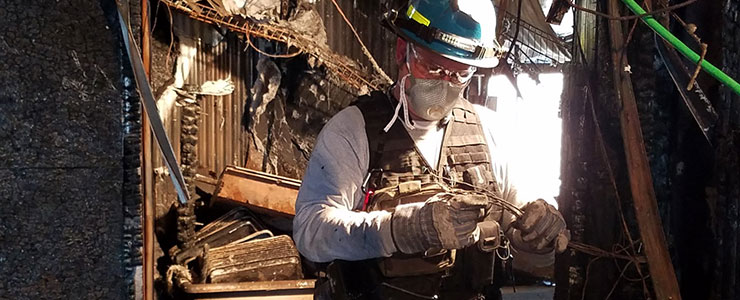
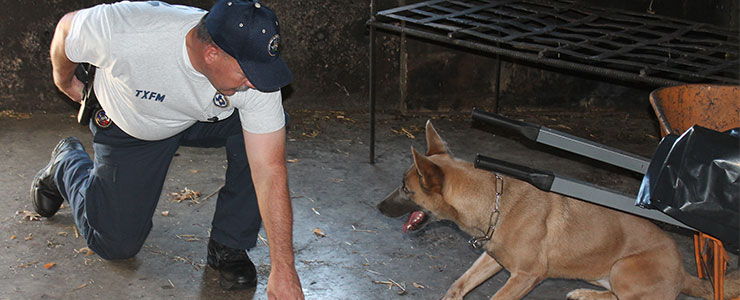
Since 1997 the State Fire Marshal’s Office (SFMO) has been part of the Texas Department of Insurance as directed by SB 371, 75th Legislature. In addition to the staff located at the Austin headquarters, SFMO employees are strategically located across the state to respond quickly to requests.
Mission: To reduce loss of life and property due to fire and related hazards.
Vision: Through the efforts of four divisions, Prevention and Outreach, Fire Safety Inspections, Licensing and Enforcement, and Fire Investigations, and in collaboration with private sector entities, the regulated fire service industry, the Texas fire service, local and state agencies, and the public, we seek to create communities well prepared to protect themselves against fire.
Strategy: We believe that Prevention is the most effective means of fire protection. We incorporate the principles of Engineering, Enforcement and Education into innovative fire protection. Fire personnel working in the areas of Engineering learn why fires are occurring and distill their findings into accurate, relevant fire protection information. Enforcement reinforces Engineering by ensuring that the public adheres to fire safety codes and statutes. Through Education, we design and deliver vital fire prevention services and information to the audiences and communities most in need of it. At our core, we understand that fire is largely preventable. We believe that through fire and life safety engineering, enforcement and education, we can help create safer communities and reduce the impact of fire.
News
- State Fire Marshal Announces Changes to Registration/License Numbers (UPDATED 12/15/2011). This notice provides a synopsis of upcoming changes to Company Certificates of Registration and Individual License numbers. These changes are part of the State Fire Marshal Office’s conversion to the State Insurance Regulators Connection (SIRCON) licensing computer software program and are required in order for companies and individuals to utilize the on-line licensing features of SIRCON.
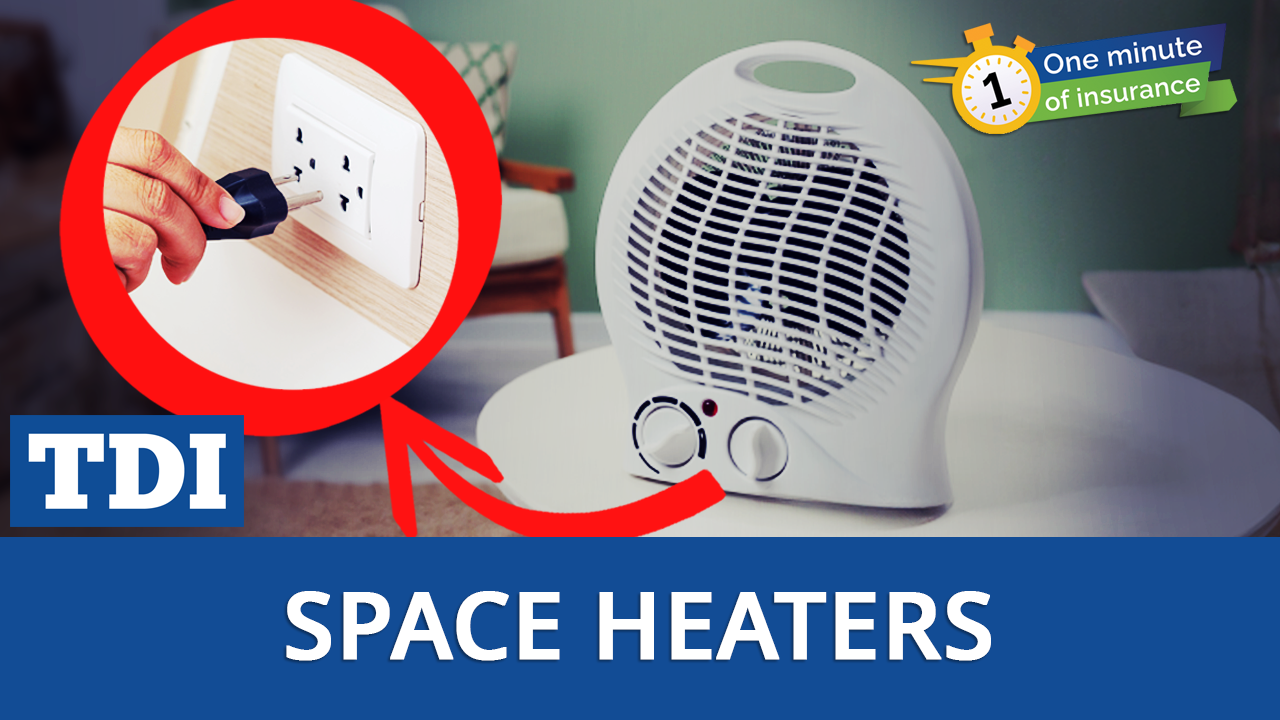
- With cold fronts rolling into Texas, the State Fire Marshal's Office offers a handy Home Heater Safety tip sheet. Whether you use central heat, wall heaters, fire places, wood-burning heaters, space heaters, or any combination of the preceding, make sure your home heating equipment is safe to use!
-
Wildland Fires in Texas
If you have insurance questions related to the wildland fires in Texas, you can call TDI's Consumer Help Line toll-free at 1-800-252-3439. Operators are available from 8am to 5pm, Monday through Friday to answer questions, provide assistance, and take complaints. TDI also provides useful information on its Wildfire Resource Page: http://www.tdi.texas.gov/consumer/storms/cpmdisfire.htmlThe Texas Forest Service offers timely Texas Wildfire Situation updates.
The Texas Division of Emergency Management also has wildland fire information on its website: http://www.txdps.state.tx.us/dem/index.htm
- Visit the web site of the National Fire Protection Association (NFPA) for newly available, read-only access to the NFPA codes and standards referenced in our state's statutes and/or regulations.
-
Preparing For Wildfires Is Everyone's Responsibility
Texas is officially now in the midst of the worst one-year drought on record. Fire bans are in place for 109 of Texas' 254 counties. With wildfires having struck or threatened all but two of the state's 254 counties, on December 27, 2011, Gov. Perry renewed his declaration, for the 13th time since it was first issued on Dec. 21, 2010, that extreme fire hazard continues to create a threat of imminent disaster for the people in the State of Texas. On December 14, Gov. Perry announced that the Federal Emergency Management Agency (FEMA) has granted the state's repeated request to expand its major disaster declaration to include 119 counties eligible for wildfire assistance, and extend the incident period from April 6, 2011, through August 29, 2011. The original declaration issued by FEMA on July 1, 2011, covered wildfires between April 6, 2011, and May 3, 2011, and only included 45 counties.
Since November 15, 2010, the Texas Forest Service and area fire departments have responded to more than 31,000 fires that have burned about 4 million acres and more than 2,500 homes. Three Texas firefighters have died in the line of duty, in addition to a number of injuries.
Over the last two years, 85 percent of the wildfires in Texas have occurred within two miles of a community – so it’s obvious that wildland fires are not just a problem for rural homeowners.
Many Texans have been moving to the Urban Wildland Interface, where subdivisions and businesses meet the surrounding forests and fields. With this move to the wildlands, there are new fire risks.
With an increase in the wildland fire risks across Texas due to extended drought conditions and increasing urbanization, now is the time to be more Firewise.
The Texas Forest Service explains the Urban Wildland Interface and offers valuable information on how to minimize wildfire risk and fire suppression tactics at its Web site.
As a homeowner, you are not powerless in your defense against wildfires. By taking a proactive approach to wildfire prevention and home defense, you can significantly increase your safety and your home's likelihood of survival during a catastrophic wildfire. Unfortunately, these measures cannot guarantee your safety in the face of catastophic fires. Therefore, it's of paramount importance to "Have an Exit Strategy."
"Have an Exit Strategy" where you live, work, play, and when you're on the road. As the drought continues to intensify, you and all Texans face extreme danger of wildfire this year, so be certain to have an escape plan. Fire propelled by strong winds can move as fast as 60 miles per hour. When told to evacuate, leave the area immediately. Choose a route that leads away from the fire. Stay alert to changes in the speed and direction of fire and smoke.
- School Fire Exit Drill Report Forms - Download 2011-2012 Fire Drill Form. Download Required fire drill and fire prevention education and information forms. Important Notice: Schools should no longer send copies of their fire drill reports to the State Fire Marshal's Office. Just keep the completed report for three years in your school's records.
- State Fire Marshal's Office Now Responsible for Fire Safety Inspections of State-Leased Buildings: Under the provisions of HB 1951, the State Fire Marshal's Office (SFMO) is required to inspect buildings leased by state agencies. This State Fire Marshal's Notice more fully explains the SFMO's responsibilities and plans for coordination with local authorities in carrying out this mandate.
- Our Have an Exit Strategy initiative now has a Facebook page!
- On December 10, 1910, the Office of the State Fire Marshal began its first century of fire safety service to Texas. As we begin our second 100 years of fire safety efforts, we can look back and safely say that Texas is more fire safe than it was in 1910. But as long as there are lives lost and property losses caused by fires, our work is not done and our efforts, in coordination with the rest of the fire service in Texas, will continue, undiminished in scope, as new fire-safety challenges present themselves to all of Texas. Read/download the history of the State Fire Marshal's Office.
Announcements
- Texas Fire and Life Safety Public Educators Resources is a new service of the State Fire Marshal's Office that serves as the central resource or clearinghouse for information and materials for Texas fire and life safety public educators. Our objective is to enhance community education programs and initiatives.
- The State Fire Marshal's Office offers Educational Resources for Local Fire Marshals that can be used to prepare for public presentations, city council meetings, county commissioners meetings, school board meetings, etc.
- Smoke and Carbon Monoxide Detector Safety: HB2118 mandates that the State Fire Marshal's Office, Texas Department of Insurance, provide information on the necessity and use of smoke and carbon monoxide detectors.
- The State Fire Marshal's Office offers sources for information about the life-saving benefits of fire sprinklers. On July 3, 2010, the need for escape planning and smoke alarms, as well as the effectiveness of fire sprinkler systems in limiting damage to homes, were dramatically demonstrated with a live “Side-by-Side" Burn.
- In the October 28, 2009, meeting of the International Code Council (ICC) in Baltimore, Maryland, proposals made to eliminate the requirement for residential fire sprinklers in the International Residential Code (IRC) were defeated. These requirements were included in the 2009 IRC, which became effective January 1, 2011.
- "Itzagascan" - temporary gas cans - are not approved by the State's Fire Marshal Office for public use. Please read this letter for more information.
- Clow Valve Company Safety Notice regarding fire hydrant repair. Some clients have yet to respond to this safety notice. Clow still wants to find every hydrant affected by this issue and replace every affected upper stem.
- The National Fire Protection Association has issued an NFPA Safety Alert Regarding Antifreeze in Residential Sprinklers recommending that residential fire sprinkler systems containing antifreeze be drained and the antifreeze replaced with water. The alert follows a research study and an initial set of fire tests conducted after a fire incident raised concerns about antifreeze solutions in residential sprinkler systems. The incident involved a grease fire in a kitchen where a sprinkler with a high concentration of antifreeze deployed. Ongoing events, research, and additional information regarding antifreeze in residential sprinklers.
- The State Fire Marshal's Office Supports Courage To Be Safe, the Lifesaving Training Program Developed by the National Fallen Firefighters Foundation - Texas fire departments can help prevent firefighter line-of-duty deaths with the program.
- Take the Seat Belt Pledge: Five of the 26 firefighter fatalities investigated by the SFMO since September 2001 involved victims who were not using seat belts or similar restraining devices. All but one of these deaths were probably preventable, had a seat belt or restraining device been used. Fastening a seat belt vastly improves survivability in a collision. Every fire department should take the seat belt pledge; to date, more than 40 Texas fire departments have achieved 100 percent compliance. But there are many more to go. Read more about the pledge.
- Free membership in the Quick Response Media Corps to help local fire departments get fire safety facts in local news media. Sign up to join the Quick Response Media Corps or e-mail for enrollment form.
- Texas Forest Service Helping Hands Program accepts and donates surplus fire and emergency equipment to volunteer fire departments.
More
- All SFMO publications and brochures
- U.S. Fire Administration
- U.S. Fire Administration Kids Page
- Links to Other Emergency Services and Organization Web Sites
Highlights
February 5-11, 2012, is Burn Awareness Week and kick-off to a year-long educational campaign (including educator's guide and PowerPoint presentations) from the American Burn Association, focusing on preventing scald burn injuries. Scald injuries are painful and require prolonged treatment, but most are preventable. Anyone can sustain a scald burn, but infants, young children, older adults and people with disabilities are more likely to be scalded. Most burn injuries occur in the person’s own home.
Reward for Reporting Arson. The public can report suspicious activity involving fires by calling, toll-free, 1-877-4FIRE45 (1-877-434-7345). The Arson Hotline is staffed 24 hours a day. Tips may also be submitted by e-mail. Reward funding is provided by A Texas Advisory Council on Arson (ATAC).
The statewide campaign, Have an Exit Strategy, has a simple, yet powerful fire safety message: Always locate a second exit when entering a public place. Learn more.
| Help For | Toll-Free # |
|---|---|
| Consumers | 800-252-3439 |
| Injured Workers | 800-252-7031 |
| Reporting Arson | 877-434-7345 |
| Reporting Fraud | 888-327-8818 |
| Safety Violations | 800-452-9595 |
| [ tdi phone listings ] | |
| Help For | Link |
|---|---|
| Agents / Adjusters | |
| Filing Complaints | |
| Health Providers | |
| Media / Others | |
| Website Problems | |
| Favorite Links | |
|---|---|
| Agent Lookup | Company Lookup |
| Enforcements | TDI Jobs |
| DWC Forms | All Other Forms |
| DWC Home | TXCOMP Home |
| TDI StormLink | Windstorm |
| [ popular links ยท more lookups ] | |
For more information contact:
Last updated: 02/06/2012